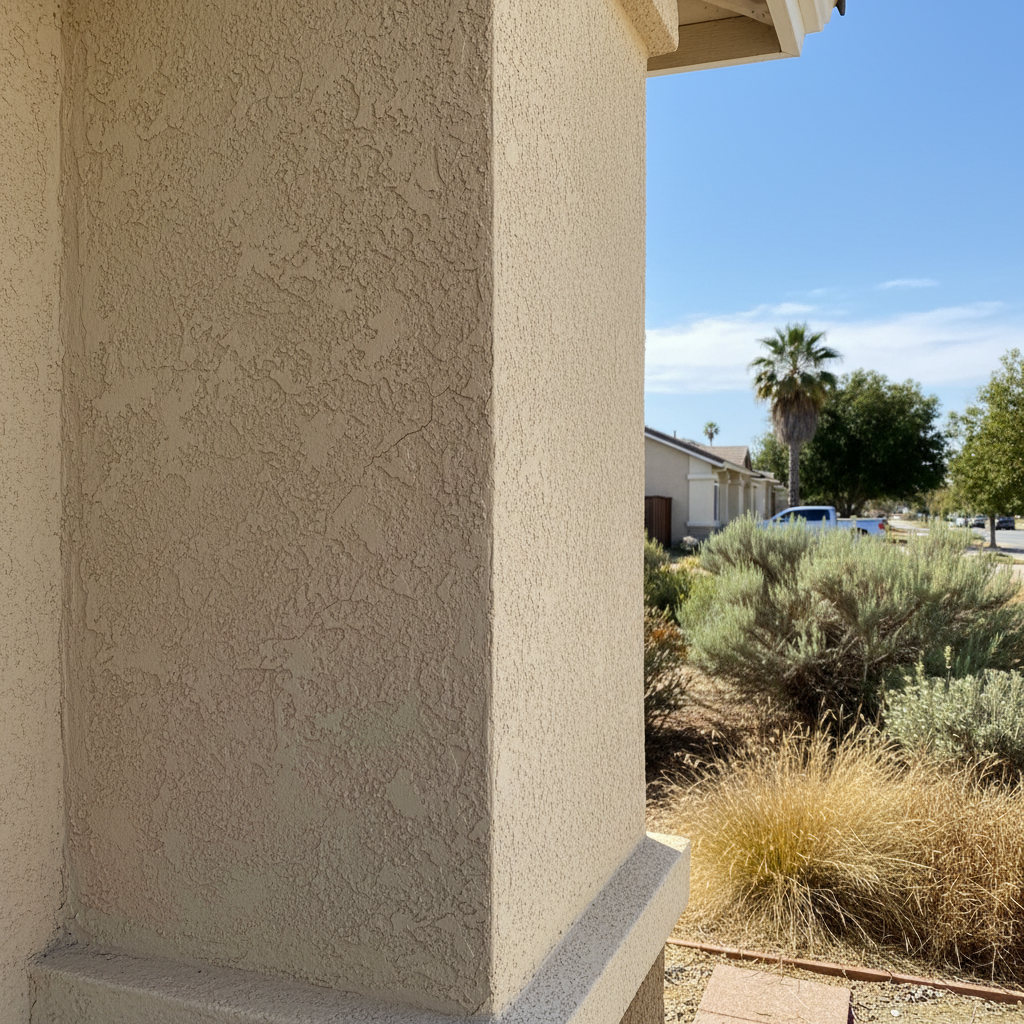
Alright, let's talk about redashing your stucco. If your old finish is looking tired, cracked, or just plain dated, a fresh coat of stucco can make your whole house feel new again. But when it comes to that new finish, you've mainly got two big choices: traditional cement-based stucco or a synthetic (EIFS) finish. I see folks wrestling with this decision all the time here in Fresno, so let's break it down.
Traditional Stucco Redash: The Classic Choice
This is what most people picture when they think about stucco. It's a cement-based product, usually a mix of Portland cement, sand, lime, and water. It's been around for centuries, and there's a reason for that – it's tough, durable, and proven.
The Good Stuff
- Durability: This stuff is hard as a rock once it cures. It can take a beating from the sun, wind, and even the occasional rogue sprinkler head. We get some pretty intense summer heat here in Fresno, and traditional stucco handles those temperature swings without much fuss.
- Breathability: Traditional stucco is porous, meaning it can breathe. This is important because it lets any moisture that might get behind the stucco evaporate out. That's a big deal for preventing mold and rot in your wall assembly, especially with our occasional heavy rains.
- Cost: Generally, traditional stucco costs less upfront than synthetic options. The materials are cheaper, and the application process, while skilled, is a bit more straightforward.
- Repairability: If you get a crack or a ding, patching traditional stucco and blending it in is usually pretty easy.
The Not-So-Good Stuff
- Cracking: While tough, traditional stucco can develop hairline cracks over time. This happens especially with our expansive clay soils here, which can cause some minor foundation movement. These are usually cosmetic, but they can be an eyesore.
- Weight: It's heavy. This isn't usually an issue for existing homes, but it's something to think about for structural loads if you're building new or adding on.
- Limited Color Retention: The color is mixed into the top coat, but it can fade over many years, especially on south-facing walls that get hammered by the sun. You might need to paint it eventually to refresh the look.
Synthetic Stucco Redash: Modern Performance
Synthetic stucco, often called EIFS (Exterior Insulation and Finish Systems), is a bit different. It's a multi-layered system that includes an insulation board, a base coat with a fiberglass mesh, and then a finish coat that's typically acrylic-based. It's not just a finish; it's a whole system.
The Good Stuff
- Flexibility & Crack Resistance: This is where synthetic really shines. The acrylic finish is flexible, so it's much less prone to cracking than traditional stucco. That's a huge plus for homeowners who want a smooth, unblemished look for longer.
- Color Retention: The acrylic finishes hold their color incredibly well. They're fade-resistant, and you'll get a vibrant, consistent color for years without needing to paint.
- Insulation: Because it includes an insulation board, EIFS can make your home more energy efficient. That means potentially lower utility bills, which is always nice when it's 105 degrees outside.
- Lightweight: It's much lighter than traditional stucco, which can be an advantage in some construction scenarios.
The Not-So-Good Stuff
- Cost: Synthetic stucco is typically more expensive to install upfront. The materials are pricier, and the application requires specialized training and attention to detail.
- Moisture Management: This is the big one. EIFS is a barrier system, meaning it's designed to keep water out. If water gets in (say, through a poorly sealed window or a roof leak) and can't get out, it can cause serious problems like rot and mold behind the system. Proper installation with drainage planes and careful flashing is absolutely critical. This is not a system you want a cut-rate contractor putting on your house.
- Impact Resistance: The standard synthetic finishes can be softer than traditional stucco, making them more susceptible to dings and dents from impacts (like a thrown baseball or a weed wacker). You can get impact-resistant versions, but they add to the cost.
- Repair Complexity: Repairs can be more involved and harder to blend seamlessly compared to traditional stucco.
So, Which One Should You Choose for Your Fresno Home?
Look, both are good products when installed correctly. But for most folks in Fresno looking to redash their existing home, I usually lean towards a high-quality, traditional cement-based stucco finish. Here's why:
You've got an existing home, which likely already has a traditional stucco base. Adding another layer of traditional stucco is a proven, reliable method. The cost is generally lower, it's incredibly durable, and its breathability is a big advantage for managing any incidental moisture that might get behind the walls. While it might develop hairline cracks over time, those are usually minor and easy to manage.
Synthetic stucco is fantastic for its crack resistance and color retention, but the critical importance of perfect moisture management with EIFS means you absolutely cannot skimp on installation quality. If you're going that route, you need to be sure you're working with a contractor who truly understands EIFS and its specific requirements for our climate.
For a straightforward redash, you can't go wrong with a well-applied traditional stucco finish. You'll get a beautiful, long-lasting exterior that stands up to Fresno's climate without breaking the bank. At Top Line Fresno Stucco, we've done countless redashes using both, and we're happy to walk you through the specifics for your home. Give us a call, and we'll take a look at what you've got and what you're hoping to achieve.